
Choosing the right kitchen benchtop is one of the most critical decisions in any kitchen renovation or makeover. Your benchtop needs to be functional, durable, and stylish, fitting seamlessly into your lifestyle and design vision. Here, we explore five popular benchtop materials in Australia – Laminate, Engineered Stone, Corian, Sintered Stone and Natural Stone – and their respective pros and cons to help you make an informed choice.
1. LAMINATE
High Pressure Laminate benchtops have been a staple in Australian kitchens for decades, offering an affordable and versatile option for homeowners.
Pros:
- Affordability: Laminate is one of the most cost-effective benchtop materials, making it an excellent choice for budget-conscious renovations.
- Variety of Designs: Modern laminate benchtops come in a wide range of colours, patterns, and finishes, including realistic imitations of wood, stone, and concrete.
- Easy Maintenance: Laminate surfaces are non-porous, making them easy to clean and resistant to stains.
- Lightweight: This material is easier to transport and install compared to heavier alternatives.
Cons:
- Durability Issues: Laminate is prone to scratches, burns, and chipping, especially in high-use areas.
- Lower Heat Resistance: Hot pans or pots can damage the surface, so you’ll need to use trivets.
- Shorter Lifespan: Compared to other materials, laminate may not last as long, particularly in busy households.

2. ENGINEERED STONE – Silica-Free
Engineered stone has also been been a popular choice in Australian kitchens for almost 30 years, and recent advancements have made it even safer and more sustainable. These new-age Silica Free stone benchtops now align with updated Australian government regulations to protect health and safety.
Pros:
- Health-Safe: The new silica-free engineered stones reduce the risks associated with silicosis, ensuring a safer environment for fabricators and homeowners.
- Durability: Engineered stone is highly resistant to scratches, stains, and impacts, making it ideal for busy kitchens.
- Wide Range of Colours: This material is available in an extensive array of colours and patterns, offering consistency in appearance.
- Low Maintenance: Its non-porous surface doesn’t require sealing and is easy to clean.
- Modern Elegance: These benchtops maintain the luxurious appearance of traditional stone without imperfections or health risks.
Cons:
- Cost: While not as expensive as natural stone, silica-free engineered stone remains a slightly higher-cost option compared to laminate.
- Heat Sensitivity: Although durable, engineered stone can still be damaged by excessive heat, so it’s important to use trivets or heat pads.
- Heavy: Its weight can increase installation complexity and cost.

3. CORIAN / SOLID SURFACE
Corian is a solid surface material made from acrylic resin and natural minerals, offering a seamless and contemporary look.
Pros:
- Seamless Finish: Corian can be molded into custom shapes without visible joins, creating a sleek and modern aesthetic.
- Repairable: Scratches and minor damage can often be buffed out or repaired, extending the benchtop’s lifespan.
- Non-Porous: Like engineered stone, Corian is non-porous, making it resistant to stains and easy to clean.
- Design Flexibility: Its malleability allows for unique designs and integrated sinks.
Cons:
- Cost: Corian is a premium material, often priced higher than laminate and engineered stone.
- Heat Sensitivity: It is vulnerable to heat damage, so precautions are necessary.
- Susceptible to Scratches: While repairable, Corian is softer than some materials and can scratch more easily.
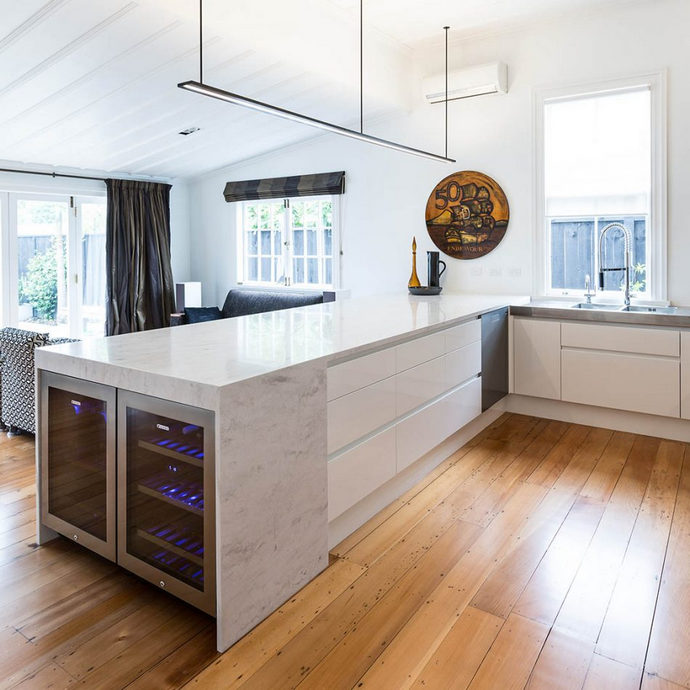
4. SINTERED STONE (e.g. Dekton)
Sintered stone is a revolutionary material made through a high-tech process that mimics natural stone formation, offering exceptional durability and performance.
Pros:
- High Durability: Sintered stone is highly resistant to scratches, stains, and chips, making it ideal for heavy-duty use.
- Heat and UV Resistance: This material can withstand extreme heat and UV exposure, making it suitable for both indoor and outdoor kitchens.
- Low Maintenance: Its non-porous surface resists water, stains, and bacteria, eliminating the need for sealing.
- Wide Range of Finishes: Available in a variety of colours, textures, and finishes, sintered stone suits a range of kitchen designs.
Cons:
- Cost: Sintered stone is a premium material, often priced higher than engineered stone and comparable to natural stone.
- Complex Installation: Its hardness can make cutting and installation more challenging, requiring skilled professionals.
- Limited Repair Options: While durable, damage to sintered stone can be difficult to repair if it occurs.

5. NATURAL STONE – Granite & Marble
Natural stone benchtops are synonymous with luxury, offering unique patterns and a timeless appeal.
Granite:
Pros:
- Durability: Granite is one of the most robust benchtop materials, highly resistant to heat, scratches, and stains (when sealed).
- Unique Appearance: Each slab of granite is one-of-a-kind, providing a distinctive and natural look.
Cons:
- Cost: Granite is expensive, both in material and installation costs.
- Porosity: It requires regular sealing to maintain its resistance to stains and bacteria.
- Heavy: Its weight may necessitate reinforced cabinetry and higher installation costs.
Marble:
Pros:
- Elegant Appearance: Marble’s luxurious veining and colour variations make it a standout feature in any kitchen.
- Heat Resistance: It’s naturally heat-resistant, though caution is still advised.
Cons:
- High Maintenance: Marble is more porous than granite, requiring frequent sealing to prevent staining.
- Susceptible to Scratches: It’s softer than granite and can scratch or etch easily, especially with acidic substances.
- Cost: Like granite, marble is a high-end material with a premium price tag.

Conclusion
The right kitchen benchtop for your home depends on your budget, lifestyle, and design preferences. Laminate is an affordable and versatile choice for those prioritising cost, while silica-free engineered stone combines safety, durability, and elegance. Sintered stone offers unparalleled performance and modern design options, while Corian provides seamless versatility. Natural stone, like granite and marble, delivers unparalleled luxury and uniqueness. Weighing the pros and cons of each material will ensure you invest in a benchtop that enhances both the function and aesthetic of your kitchen for years to come.